

Writer-director Elliot Tuttle’s provocative feature debut Blue Film announces the filmmaker as a bold new voice in queer cinema. In the opening frames, the audience is greeted with the words, “What’s up faggots”, as we’re thrown into the midst of a steamy livestream by adult content creator Aaron Eagle (British Boots star Kieron Moore) connecting with his thirsty fans. We’re immediately made voyeurs, as Aaron playfully taunts his “pay pigs”, instructing them to hit their poppers as he sniffs his pits and teases what he will show for more e-tips. Aaron announces that later that night one of his “faggots” will be paying him $50,000 for an overnight visit, deriding the client for how pathetically needy he is.
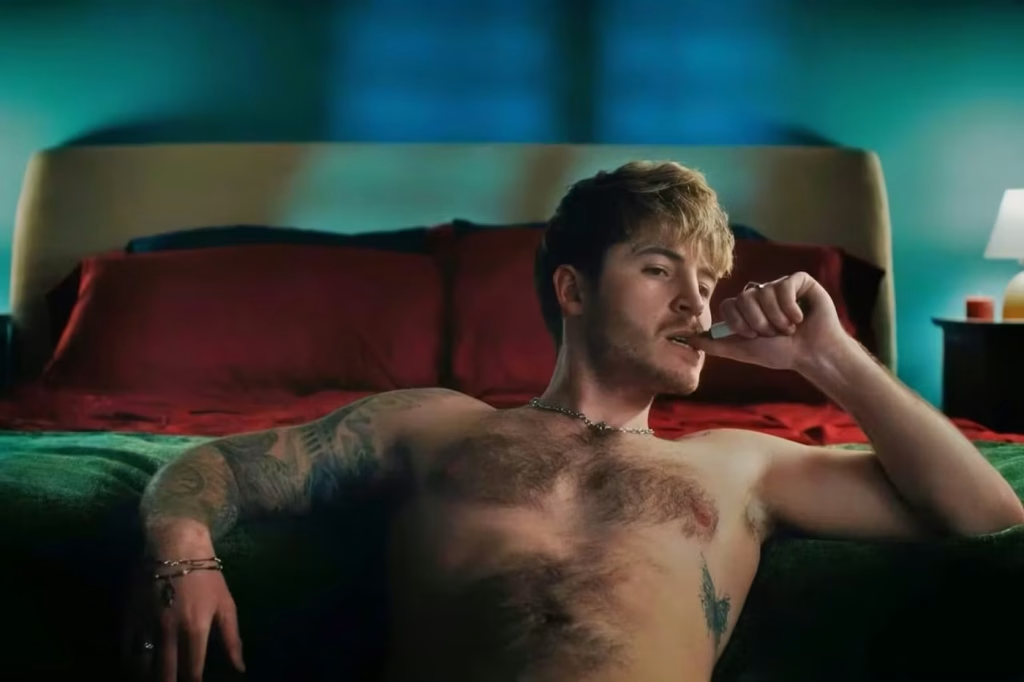
Watching this livestream is the much older man who has anonymously hired him, Hank (Tony-winning stage and screen veteran Reed Birney), his face already covered with a balaclava as he waits alone for Aaron’s arrival at the Los Angeles house he has rented. When he gets there, the handsome twentysomething is quick to take off his clothes for Hank as he films him (“if you looked like me you’d want to be naked all the time too”, he brags), but he is reluctant to expose himself emotionally on-camera as he is probed with a raft of personal questions. A riveting push-pull wrestle for control of the situation unfolds, with Hank paying “every penny he has” for what he wants from Aaron, a young man used to exerting and hiding behind the dominant on-screen persona he has carefully cultivated.

With Aaron out of his comfort zone and threatening to leave, Hank is unmasked and reveals his true identity. He is a former middle school English teacher who taught Aaron back in their hometown of Bedford, Maine, where he was convicted of the attempted sexual assault of one of Aaron’s 12-year-old classmates. While Hank admits that he has thought about Aaron every day since he last saw him, the younger man has attempted to block out his past as he has forged a new life and identity for himself in California.
Set over the course of one night, in a single location, the two men—each immersed in their own kinds of shame, self-loathing, loneliness, and the lies they have told themselves—begin to drop their masks, literally and figuratively, as a compelling confessional unfurls. With their pasts connected, they gradually become more open with one another, sharing thoughts on their own “perversions” in ways which they have likely never uttered out loud before.

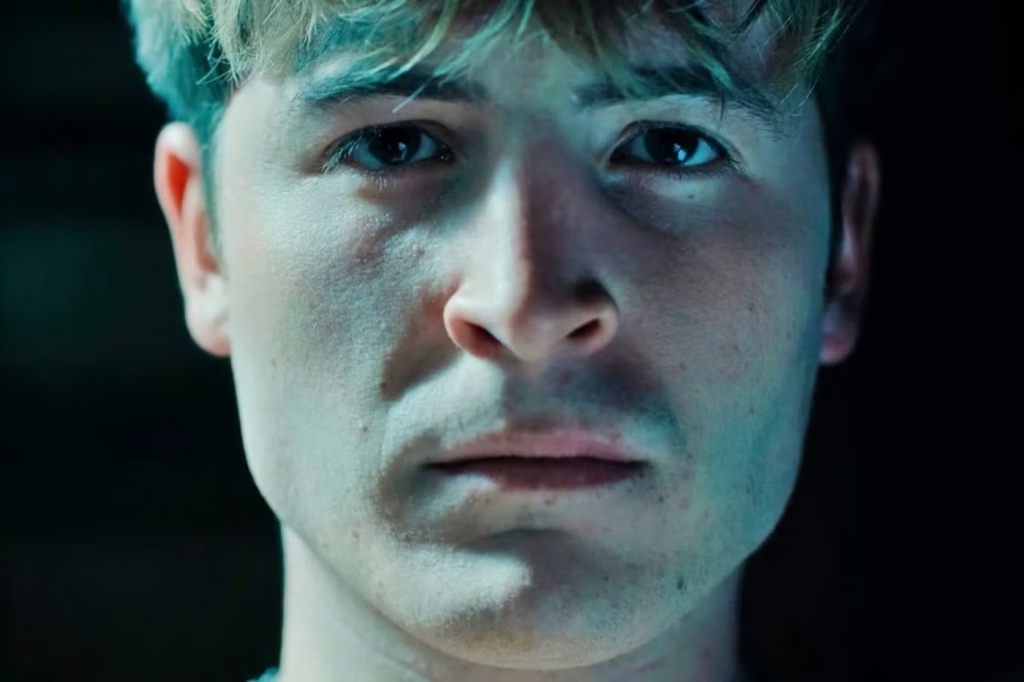
What builds is an intense and intoxicating chamber piece fueled by impeccable acting and a taut, unpredictable screenplay. With captivating eyes and a richly expressive face, often held in lingering close-up shots, Moore gives a searing tour-de-force performance that flickers from deep rage to discomfort at what he’s hearing through to a painful vulnerability. He masterfully harnesses his physicality to exude unassailable bravado one moment before shrinking to defenseless the next. Watching Moore’s fearless performance feels like we’re discovering the next Tom Hardy, or even Marlon Brando. It is the stuff that screen careers are made of.
Opposite Moore, Birney brings an unexpected lightness of touch to Hank, who is quick to smile and laugh in Aaron’s company. There is a gentle, avuncular quality to him that makes what he confesses to all the more troubling. We cannot simply brand this man as a monster, despite what he has done in his past being monstrous. In committing to creating such a fully realized portrait, Tuttle and Birney force us to face the complexity and potential for darkness in human nature. In a sign of truly first-rate acting, both performers are just as powerful and engaging when actively listening as they are when they’re doing the talking, with editor Zach Clark knowing just the right moment to switch between protagonists as we become immersed in their thoughts.

Likely to have stoked some controversy in any case, at a time when some loud conservative politicians and commentators have invoked hateful rhetoric that attempts to label all LGBTQ+ people as “groomers”, the centering of a pedophile character in this simmering two-hander brings an increased element of danger and taboo-busting. Rather than adding any fuel to that fire, the film’s depiction of this deeply flawed individual in fact serves as a rebuke to that willful mischaracterization of our community.
Although Tuttle never holds back in the sex scenes, Blue Film is transgressive and subversive not so much in its imagery, but in its non-judgmental lens. Hank certainly isn’t excused for his behaviour or framed sympathetically, just as he says he doesn’t excuse himself, but he is allowed to speak freely. At one point, he even shares how the boy he attempted to assault looked through his eyes. Tuttle treats his audience with respect, as adults, allowing us to be suitably uncomfortable, unmoored by authorial commentary, leaving the judging to the characters themselves, and to us.
What makes Tuttle’s writing so impressive is that despite the film’s action transpiring over just hours, through what these characters divulge about themselves we get an insight into many years of their lives. Along with the ideas that they have been tormented by or attempted to reassure or comfort themselves with. Like Hank framing his urges historically as he discusses the socially accepted pederasty of ancient Rome.
Given the inner turmoil of these characters, creating a dark and brooding look might have been the expected move, instead cinematographer Ryan Jackson-Healy delivers beautifully composed and lit shots that make the film ravishing, drawing us in while some of the subject matter repels us. As we become engrossed in Aaron and Hank’s intimate exchange, Tuttle continually unsettles us as he interrupts the flow, intercutting with home video of an unselfconscious young child (we assume to be Aaron), along with footage from the digital camera Hank is using, and eventually the crisp visuals of the main thrust of the film give way to a lowfi bootleg video quality; creating a layered visual language of surveillance.

As the characters discuss the spirituality of their perversions, the visuals build to a transcendent scene as the screen is bathed in blue light, literally becoming a blue film. It is a typically gutsy move by the filmmaker that really pays off. While Art director Marley Sall makes an impact with a striking colour palette of deep blues and reds. Also among the film’s strengths is composer Isaac Eiger’s exquisitely disquieting electronic score, used sparingly to establish a moody soundscape. Generally more tonal sounds than traditional film music, and even discordant at times, its effect put me in mind of some of Angelo Badalamenti’s more paired down themes.
Playing out like a mutual therapy session, it is not only what is spoken but also what remans unsaid that lingers and keeps us involved in and unnerved by these indelible characters long after the end credits have rolled. I was also left eager to see Tuttle’s next move.
By James Kleinmann
Blue Film opens in New York and Los Angeles on Friday, May 8th, 2026 from Obscured Releasing expanding from Friday, May 15th. Filmmaker and actor Q&As at select screenings at IFC Center and Landmark Sunset.
