

I’ve always admired how filmmaker Jeffrey Schwarz has dedicated much of his career to shining a light on so many untold queer stories, including I Am Divine, The Fabulous Allan Carr, Tab Hunter Confidential, and Vito. In his latest, Mineshaft: The Cruising Murders, he takes a multi-pronged approach to the real murders which inspired the notorious 1980 William Friedkin thriller, Cruising, the production of that film, and the protests and activism which led to more queer representation in front of and behind the camera. This sleek, smart and moving documentary impressively covers a lot of ground in its 84 minutes of runtime, and I mean this as a compliment, I could have watched an entire 8-part miniseries on the subject.

My relationship with Cruising takes me back to when I first moved to Los Angeles to attend film school at UCLA. I remember observing the protests in front of the Bruin Theater in Westwood Village with very mixed feelings. William Friedkin had made some of my favorite films such as The Exorcist and The French Connection. Al Pacino had achieved legendary status already with his performances in The Godfather, Dog Day Afternoon, and Serpico. While I understood the outrage over a film which had the potential to demonize my community, part of me wanted to give these icons I admired so much a chance. Couldn’t we watch the film first before forming our opinions? I’ll admit my younger self didn’t fully comprehend the argument as much as I do now, so off I went across the picket line to make up my own mind.

I came away from the film with very mixed feelings. I loved the gritty filmmaking along with its terrifyingly visceral punch, but I also laughed at a lot of the dialogue, thought the mystery wasn’t much of one, and yes, understood why people felt it denigrated queer people. Still, I found it provocative and a fascinating time capsule during this Pre-AIDS era. Sex lead to death in the movie and just a few short years later, that would come true in a different form.

Little did I know, however, of the real murders which inspired Friedkin to write the script in the first place. The first section of Schwarz’s documentary takes us through them, concentrating specifically on the tragic killing of Variety reporter Addison Verrill. In 1977, he brought a man home from The Mineshaft who attacked him while he slept, apparently upset that the sex they had was not reciprocated. The murderer, Paul Bateson, eventually confessed to Arthur Bell, a Village Voice journalist. This caught the attention of Friedkin, who had coincidentally cast Bateson in a scene in The Exorcist. After visiting him in prison, Friedkin began work on his screenplay for Cruising. Schwarz tells this story from multiple angles including such luminaries as Michael Musto, filmmakers such as Jim Fall and Charles Lum, and most movingly from Veriill’s sister Pamela and Verill’s ex-partner, Robert Geary. They go a long way toward humanizing Addison and we feel the depth of their loss as they bring him to life.
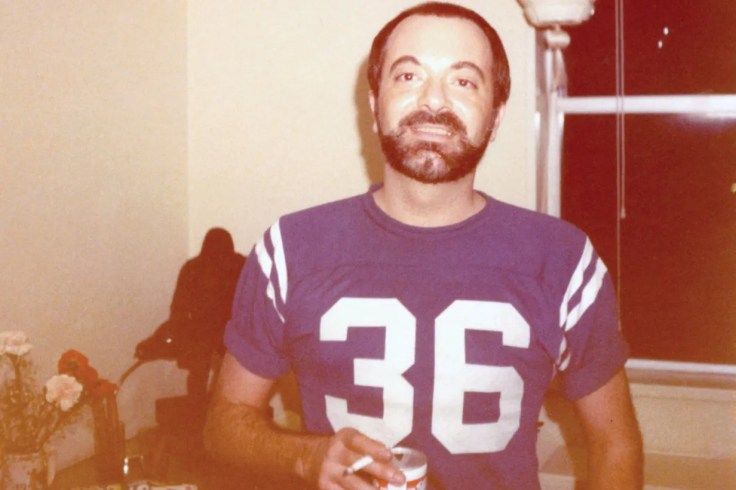
Schwarz has tasked himself with some very difficult storytelling challenges. Where do you go from the impassioned peaks of this early section? My initial instinct was to feel he could have saved some of the more heartbreaking material for his third act, yet I remained in awe of his ability to take us on such a layered journey. As such, you feel like you’re growing and maturing along with the film, going from trauma to outrage and finally landing in a place of inspiration. This approach, in retrospect, feels exactly right.

The second section takes us through the film’s production and the attendant protests which aimed to disrupt it. Equal parts funny and exasperating, Schwarz does a great job in making you feel like you were in New York, on those streets, in those clubs, or on those trucks down by the piers. He paints Friedkin as someone with his heart in the right place, however misguided. Arthur Bell’s crusade against Friedkin and his movie led the organizing to disrupt the filming wherever they could.
The third section explores the aftermath and how it’s quite possible that Arthur Bell, as difficult a person as he appeared to be, may also be an unsung hero in opening the floodgates to more queer and more balanced representation in film. This left me with a renewed sense of hope for what our community, if we continue to fight, can accomplish. Schwarz deserves all the accolades for taking us on this journey with such intelligence, charm, devastation, and yes, humor. Who knew someone could squeeze so much out of a box office bomb, which could have easily stayed on a scrap heap, and given us so much to think about?
By Glenn Gaylord, Senior Film Critic
Mineshaft: The Cruising Murders screened at OutfestNext Los Angeles LGBTQ+ Film Festival on Saturday, July 25th, 2026. For more on the film and updates on future screenings go to AUTOMAT PICTURES.

For more film reviews by Glenn Gaylord subscribe to his YouTube channel here ——> GLENN HATES EVERYTHING

Leave a Reply